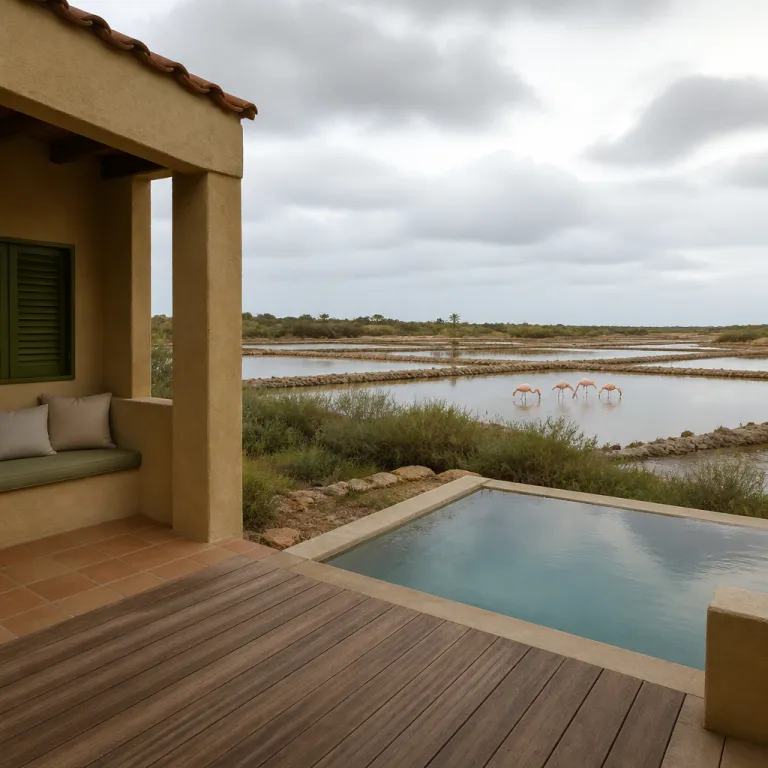
Why stay around jan kok for a refined Curaçao escape
Jan Kok is a serene coastal area in Curaçao where salt pans, flamingos, and restored plantation houses frame a discreet luxury scene. Around the former Landhuis Jan Kok estate, the landscape tells a layered history that appeals to travelers who value culture as much as comfort. This setting suits guests who prefer premium villas and intimate high end hotels over crowded resort strips.
The name Jan Kok in this travel context refers specifically to the Curaçao locality and its historic plantation, not to contemporary individuals who share the same name. When you plan a stay near the Jan Kok salt pans, you are stepping into a place where Caribbean heritage, Dutch colonial administration, and the island’s salt trade quietly intersect in the surrounding hills and sheltered inlets.
Luxury travelers often ask how this tranquil bay compares with better known Curaçao areas such as Willemstad or Jan Thiel. The answer lies in the balance between privacy, nature, and access to the island’s cultural text of plantation architecture and coastal life. From a premium villa terrace above the shallow lagoons, you can watch the changing light over the salt flats while remaining within a 20 to 30 minute drive of fine dining in Willemstad and curated excursions along the western coast.
How luxury and premium booking platforms curate stays near jan kok
Specialized booking platforms for Curaçao now highlight Jan Kok as a niche address for guests seeking understated elegance. On a dedicated luxury and premium hotel booking website in Curaçao, you will usually find a carefully edited text for each villa or hotel, emphasizing privacy, service standards, and proximity to the Jan Kok salt pans. This curation matters because the area is spread out, and not every property offers the same level of comfort or direct views of the lagoons and salt marshes.
High end platforms increasingly apply a methodical, evidence based approach when they vet properties around Jan Kok. Just as serious historical studies verify every data point, professional booking teams confirm room sizes in square metres, service inclusions, and guest to staff ratios before listing. For a deeper overview of how such a luxury and premium hotel booking website in Curaçao structures its portfolio, you can review a detailed guide that explains selection criteria, inspection routines, and guest benefits.
When you search for accommodation near Jan Kok, look for platforms that present clear, human written text rather than generic templates. The best sites explain how far each property is from the flamingo viewpoints in metres or kilometres, and whether you can walk safely at sunset along the lightly trafficked access roads. They also clarify if the hotel or villa offers curated excursions that interpret the social history of the plantation era, rather than only selling standard island tours.
From plantation history to social history: understanding jan kok’s past
Staying near Jan Kok means sleeping within sight of a former plantation whose history still shapes the landscape. The restored Landhuis Jan Kok stands above the salt pans as a reminder of Curaçao’s colonial past, where enslaved families once worked the land and harvested salt for export to the Netherlands. Today, many luxury guests want their hotel stay to include context about this historical background, not just scenic views.
In European universities, historical demography and family history are established fields that examine how population structures change over time. At Radboud University in Nijmegen, for example, economic and social historians analyse long term trends in migration, marriage, and labour, often collaborating across departments. Their studies of population movements between the Netherlands, Leuven, and other regions help explain how plantation owners, merchants, and administrators connected Curaçao to wider Atlantic migration flows.
Guests who appreciate depth often enjoy reading a short text about this research tradition before walking around the Jan Kok salt pans. A typical institutional description of one Radboud professor notes that he “focuses on historical demography and social history,” a formulation that appears in university staff profiles and research project summaries. This kind of statement connects your quiet morning by the water with a broader conversation about social structures, economic change, and how families shaped both Curaçao and the Low Countries.
Academic perspectives that enrich a stay near jan kok
Several leading scholars of economic and social history have produced work that indirectly illuminates the world behind Jan Kok’s plantation landscape. Researchers such as Jan Luiten van Zanden have explored economische geschiedenis, tracing how trade, slavery, and agriculture linked Curaçao with ports in the Netherlands. Their analyses of population data and demography family patterns help explain why certain surnames, including van Bavel and Kok, appear across both Caribbean and European archives.
Within this research community, specialists like Paul Puschmann and Hilde Bras focus on family history, marriage, and migration, often drawing on parish records from Nijmegen, Leuven, and other towns. Data experts such as Kees Mandemakers and Paul Wouters contribute large scale population databases that allow scholars to reconstruct social history at the level of individual families. When you read about Jan Kok in a hotel welcome booklet, you are often seeing a simplified text that rests on this complex infrastructure of studies, datasets, and archival work.
Even if your main goal is a relaxing holiday, these academic perspectives can subtly change how you experience the Jan Kok area. A sunset walk past the salt pans becomes a moment to reflect on how population flows, economic networks, and family strategies shaped both the lagoons and the surrounding hills. Luxury travel near Jan Kok then feels less like an isolated indulgence and more like a thoughtful engagement with place.
Designing meaningful excursions: from jan kok’s salt pans to cultural routes
Premium hotels and villas near Jan Kok increasingly design excursions that weave nature, history, and comfort into a single experience. A typical curated outing might start with an early morning visit to the Jan Kok flamingo viewpoint, continue with a guided walk around the salt pans, and end with a private lunch in a shaded garden overlooking the inlets. Distances are modest, often less than 5 kilometres between stops, which allows guests to enjoy the area at an unhurried pace.
Some high end hosts collaborate with local historians who are familiar with the work of scholars such as van Bavel and van Zanden on social history and economische geschiedenis. These guides translate complex studies of population and demography family structures into accessible stories about how plantation labour, trade routes to the Netherlands, and family alliances shaped daily life. One guide describes the scene at sunrise as “the moment when the salt pans, the birds, and the old plantation house finally start talking to each other,” inviting guests to look beyond the postcard view.
Thoughtful itineraries also acknowledge the wider academic network that supports this interpretation, including figures such as Paul Wouters and Hilde Bras who contribute to historical demography projects. By linking your walk around Jan Kok with these broader studies, the excursion turns into a living seminar on family history and social change. The result is a form of luxury that values understanding as much as amenities.
Choosing the right luxury stay around jan kok
Selecting a premium property near Jan Kok starts with clarifying how you want to balance privacy, services, and cultural immersion. Some guests prefer fully serviced villas on low hills above the bays, where infinity pools and shaded terraces frame views of the salt pans. Others choose small upscale hotels closer to the main road, trading seclusion for easier access to restaurants and diving centres elsewhere on Curaçao.
When you read the descriptive text on a booking website, look for concrete details rather than vague adjectives. Reliable listings specify room sizes in square metres, walking distances in metres or kilometres, and service features such as private chefs or guided visits to the Jan Kok salt pans. The most trustworthy platforms apply a methodical approach that mirrors historical studies, checking every claim about location, amenities, and capacity just as scholars verify data in demography family research.
For travelers who care about context, it is worth asking whether the property offers any curated material on local history or social history. Some hosts provide reading lists that include work by economic and social historians at Radboud University, Jan Luiten van Zanden, or colleagues from Nijmegen and Leuven who specialise in historical demography and economische geschiedenis. In such places, a stay near Jan Kok becomes more than a holiday; it becomes a refined way to engage with the intertwined stories of population, family history, and landscape.
Key figures and context for jan kok and related scholars
- Modern reference works and biographical databases list several individuals named Jan Kok, including a Dutch footballer born in Surabaya, a molecular geneticist at the University of Groningen, and an economic historian associated with Radboud University; these people are distinct from the Curaçao locality but illustrate how one name can span sport, science, and historical demography.
- Radboud University in Nijmegen reports more than 20,000 enrolled students across all faculties in recent institutional statistics, providing a substantial base for research in social history, demography family studies, and economische geschiedenis connected to scholars working in these fields.
- Collaborative population databases developed by researchers including Kees Mandemakers and Paul Wouters contain records for millions of individuals, allowing detailed studies of family history and population change that inform interpretations of plantation societies like those around Jan Kok in Curaçao.
- Academic timelines and university biographies show that the profiled individuals named Jan Kok span the late nineteenth to the late twentieth centuries in terms of birth dates, illustrating how the same name recurs across generations and disciplines while remaining relevant to current studies.
FAQ about jan kok, Curaçao, and related historical research
Who is Jan Kok in the context of Curaçao travel ?
For travelers, Jan Kok usually refers to the coastal area in Curaçao known for its salt pans, flamingos, and the historic Landhuis Jan Kok plantation house. The name also coincides with several Dutch academics and a footballer, but in tourism the focus is on the landscape and heritage site. Luxury and premium hotel booking platforms use “near Jan Kok” to signal proximity to this scenic and historical zone.
How is the academic Jan Kok connected to historical demography ?
In academic circles, one Jan Kok is an economic and social historian at Radboud University in Nijmegen who specialises in historical demography and social history, as described in university staff profiles and research project summaries. His work examines population structures, family history, and demography family patterns over long periods, often using large archival datasets. This research framework helps contextualise plantation societies, including those that once operated around the Jan Kok estate in Curaçao.
Which other scholars are often mentioned alongside Jan Kok ?
Researchers frequently associated with this field include Jan Luiten van Zanden, who works on economische geschiedenis, and colleagues such as van Bavel, Paul Puschmann, and Hilde Bras, who focus on social history and family history. Data specialists like Kees Mandemakers and Paul Wouters contribute large scale population databases used in historical demography studies. Together, these scholars create the background knowledge that sometimes appears in interpretive materials for visitors staying near Jan Kok.
Why does a luxury stay near Jan Kok emphasise history and social context ?
High end properties near Jan Kok often highlight history because the area’s identity is inseparable from its plantation past and salt production. Guests increasingly seek experiences that combine comfort with meaningful engagement, so hosts draw on social history and historical demography research to explain how families, population movements, and trade with the Netherlands shaped the landscape. This approach turns a scenic viewpoint into a richer cultural experience.
Is the name Jan Kok associated with fields other than history ?
Yes, beyond economic history and social history, the name Jan Kok also belongs to a Dutch footballer born in Surabaya and a molecular geneticist at the University of Groningen who specialises in lactic acid bacteria, as noted in sports records and academic biographies. These individuals are unrelated to the Curaçao location but appear in biographical text and reference materials about people named Jan Kok. For travelers, it is useful to distinguish between the place in Curaçao and the various people who share the same name.