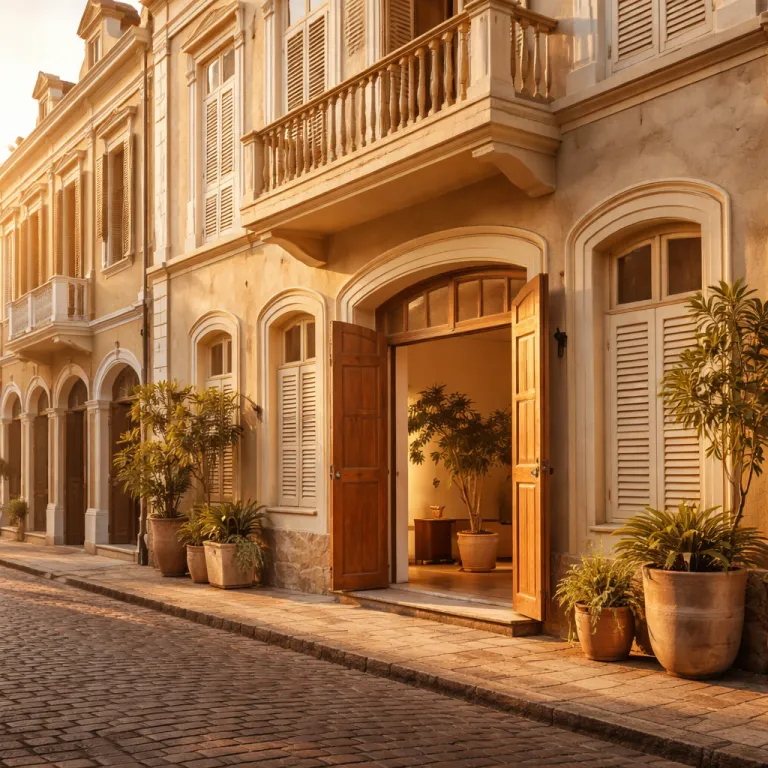
Why Willemstad rewards a slow architecture walk before any resort pool
Willemstad looks compact on the map, yet its historic streets hold more than 700 listed buildings and monuments within a few square kilometres, according to UNESCO’s World Heritage listing. This density makes a carefully paced Willemstad architecture walking tour the most rewarding way to understand the city before you settle into any luxury property on the island of Curaçao. When you are choosing where to stay, this context lets you pick hotels whose buildings and neighbourhoods match the story you want from the Caribbean city around you.
The four historic districts of Willemstad Curaçao — Punda, Otrobanda, Pietermaai and Scharloo — form a layered record of Dutch colonial power, Sephardic Jewish trade, Afro Caribbean resilience and twentieth century reinvention. A self guided walking tour, built around the Historic Willemstad Architectural Walking Guide by Michael A. Newton and published by Stichting Monumentenzorg Curaçao, turns each bridge, fort and waterfront square into a legible chapter. This approach aligns with the island’s emphasis on sustainable cultural tourism, where walking rather than a cruise ship bus keeps your footprint light while your understanding deepens.
The official route starts near Sint Anna Bay, by the floating pontoon bridge that locals simply call Queen Emma, and it can be comfortably completed in two to three hours. You cross from Punda to Otrobanda and back, tracing the curve of Anna Bay past Rif Fort, Fort Amsterdam and the colourful waterfront buildings that define most postcards of the city. Wear comfortable walking shoes, start early to avoid the midday heat, and let this tour Willemstad become the spine of your first morning before you retreat to your pool or spa.
Reading Punda and Pietermaai: façades, forts and waterfront colour
Punda is where a Willemstad architecture walking tour usually begins, because its gridded street plan and compact scale make the historic core easy to navigate on foot. Here, the Dutch colonial buildings lining the waterfront in Handelskade show steep gables, shuttered windows and thick walls, yet their vibrant colours are a relatively recent layer over an earlier whitewashed rule imposed to reduce glare. As you walk from the pontoon bridge towards Fort Amsterdam, notice how each street shifts from commercial arcades to quieter residential corners, a rhythm that still shapes how luxury travellers experience the city today.
Fort Amsterdam anchors the eastern side of Anna Bay, its ochre walls and church tower facing the water where every cruise ship must pass before docking. From this vantage point, the Queen Emma Bridge swings open like a slow mechanical fan, allowing both small boats and large cruise vessels to slip into the harbour while pedestrians pause mid crossing. The combination of fort, bridge and waterfront creates one of the most cinematic entries to any Caribbean city, and it is worth timing your walking tour to watch the movement from both Punda and Otrobanda.
Continue east into Pietermaai, where once neglected townhouses now host refined restaurants, cocktail bars and some of the island’s most characterful premium lodging. Here, learning to read a façade matters when you are booking hotels, because gable types, window proportions and verandas reveal whether a building began as a merchant’s townhouse, a family home or a warehouse. As one local architect explained to a visiting group, “In Pietermaai, the street tells you who lived here long before the cocktail bars arrived.” For a deeper look at small, design led properties in this district and beyond, explore our guide to small hotels in Curaçao for refined island stays before you finalise your reservation.
Crossing the bridges: Otrobanda, Rif Fort and the city’s layered power lines
Otrobanda, literally “the other side”, sits across Anna Bay from Punda and offers a different angle on Willemstad Curaçao for any architecture focused walking tour. Step off the Queen Emma Bridge into the Rif waterfront zone, where Rif Fort has been repurposed into a leisure complex yet still reads clearly as a defensive structure guarding the harbour mouth. The contrast between the historic fort walls and the contemporary cruise terminal infrastructure shows how the city negotiates between heritage and tourism economies.
From Rif Fort, look back towards Punda to see how the waterfront buildings stack in pastel layers, then turn inland towards Kura Hulanda, a former village of townhouses now housing a museum that addresses the transatlantic slave trade. This is one of the two anchor stops every solo traveller should prioritise on a Willemstad architecture walking tour, because it connects the elegant Dutch colonial façades with the human cost that financed them. The museum is usually open Monday to Saturday from mid morning to late afternoon, with a modest admission fee that supports ongoing research and preservation work; check current hours locally before you set out.
Higher above the harbour, the Queen Juliana Bridge — often simply called the Juliana Bridge — arcs dramatically over the city, carrying cars rather than pedestrians yet still shaping how you read the skyline. From below, its blue steel frame slices across views of Fort Amsterdam, Wilhelmina Park and the cruise ship docks, reminding you that Willemstad is both a working port and a UNESCO heritage site. While you will not walk across this bridge during your tour Willemstad, its presence frames almost every photograph you take of the city and helps orient you as you move between districts.
Scharloo, Mikvé Israel-Emanuel and Wilhelmina Park: the quieter east
East of Punda, across a short bridge, lies Scharloo, once the residential quarter of wealthy Jewish merchants whose fortunes were tied to Caribbean trade routes. Here, the streets feel calmer, the buildings slightly grander, and the façades show a different interpretation of Dutch colonial style with ornate stucco, sweeping staircases and generous verandas. This is where the underrated Scharloo Abou and Scharloo Capriles area rewards a slow walking tour with quiet photographic corners and a sense of everyday city life.
The narrative of Scharloo links directly back to the Mikvé Israel-Emanuel Synagogue in Punda, the oldest synagogue in continuous use in the Americas, with its sand covered floor symbolising forty years in the desert. This synagogue is the second anchor stop every solo traveller should not miss on a Willemstad architecture walking tour, both for its serene interior and for the way it connects to the merchant houses across the bay. The synagogue complex, which includes a small museum, generally opens on weekdays and some Sundays, with a modest entrance fee; dress respectfully and check current visiting times before you go.
On your way back towards the waterfront, detour through Wilhelmina Park, a green pause between the city and the sea that frames statues of Queen Wilhelmina and other royal references. From here, you can see the Queen Emma Bridge pivoting, the Juliana Bridge towering and the line of cruise ships at the harbour, all while sitting under sea grape trees. As one Willemstad resident put it while walking a dog at dusk, “This park is where the city catches its breath between the ships and the streets,” an elegant spot to reflect on how this island city balances royal symbolism, UNESCO heritage obligations and the practical needs of a working port.
Designing your own morning route, with coffee, snèk and hotel context
A well planned Willemstad architecture walking tour fits comfortably into a single morning, leaving your afternoon free for the pool, spa or reef. Start near the Queen Emma Bridge at Sint Anna Bay, cross into Punda for Fort Amsterdam and the Mikvé Israel-Emanuel Synagogue, then loop through Scharloo before returning via Wilhelmina Park and the waterfront. This loop covers roughly 2.75 km, while adding Otrobanda and Kura Hulanda extends the route to about 6 km in total, still manageable at a relaxed pace before lunch.
For coffee, solo travellers often favour small cafés tucked into Pietermaai’s restored buildings, where you can sit under high ceilings and watch the street life unfold. Later, head to Plasa Bieu in Punda for a local lunch, where open air food stalls serve hearty Caribbean dishes that contrast with the polished dining rooms of luxury hotels. This balance between refined spaces and everyday snèks gives you a fuller sense of Willemstad Curaçao, and it should inform how you approach booking hotels for the rest of your stay on the island.
The Historic Willemstad Architectural Walking Guide, written by Michael A. Newton and published by Stichting Monumentenzorg Curaçao, is the most reliable printed companion for this route. As the publishers explain in their visitor information, “Wear comfortable walking shoes. Stay hydrated. Start early to avoid midday heat.” With that in mind, a self guided walking tour becomes not just a cultural excursion but a practical orientation that helps you choose whether a waterfront resort, a restored city townhouse or a quiet Pietermaai hideaway best matches the way you want to experience this Caribbean city.
FAQ
How long does a Willemstad architecture walking tour usually take ?
A self guided Willemstad architecture walking tour that covers Punda, Otrobanda and a portion of Scharloo typically takes between two and three hours at a comfortable pace. The eastern loop through Punda and Scharloo is around 2.75 km, while the western Otrobanda section adds roughly 3.25 km if you include detours to Kura Hulanda and Rif Fort. Starting early in the morning keeps temperatures manageable and leaves the afternoon free for your hotel amenities.
Is the architectural walking route suitable for children and less experienced walkers ?
The core streets of Willemstad are relatively flat, and the main bridges you use as a pedestrian — especially the Queen Emma pontoon bridge — are easy to cross. This makes the route suitable for families with children and for adults who are comfortable walking a few kilometres with breaks for shade and refreshments. The only sections to approach with more care are the busier streets near the cruise terminals and the steeper approaches under the Juliana Bridge, which you can easily skip.
Where can I obtain the Historic Willemstad Architectural Walking Guide ?
The printed Historic Willemstad Architectural Walking Guide is available from several outlets in the city, including Mensing’s Caminada, Bruna Bookstore and the office of Stichting Monumentenzorg Curaçao on Scharlooweg. Buying the guide supports local heritage work while giving you detailed maps, building descriptions and historical context for each stop. It is a useful complement to any digital map you use while exploring the city on foot.
Can I join a guided tour instead of walking alone ?
The Historic Willemstad Architectural Walking Guide is designed primarily for self guided exploration, which suits independent travellers who prefer to move at their own pace. However, several local operators offer guided versions of a tour Willemstad, often combining architectural highlights with museum visits or harbour viewpoints. If you are staying in a luxury hotel, the concierge can usually arrange a private guide who tailors the route to your interests and timing.
How does this walking tour help when booking hotels in Curaçao ?
Walking through Punda, Otrobanda, Pietermaai and Scharloo gives you a clear sense of each district’s atmosphere, from lively waterfront streets to quieter residential lanes. This experience helps you decide whether you prefer a hotel in the historic city core, a restored townhouse in Pietermaai or a larger resort slightly outside the centre. Understanding the architecture and urban layout first ensures that your choice of accommodation aligns with how you want to experience Willemstad and the wider island.