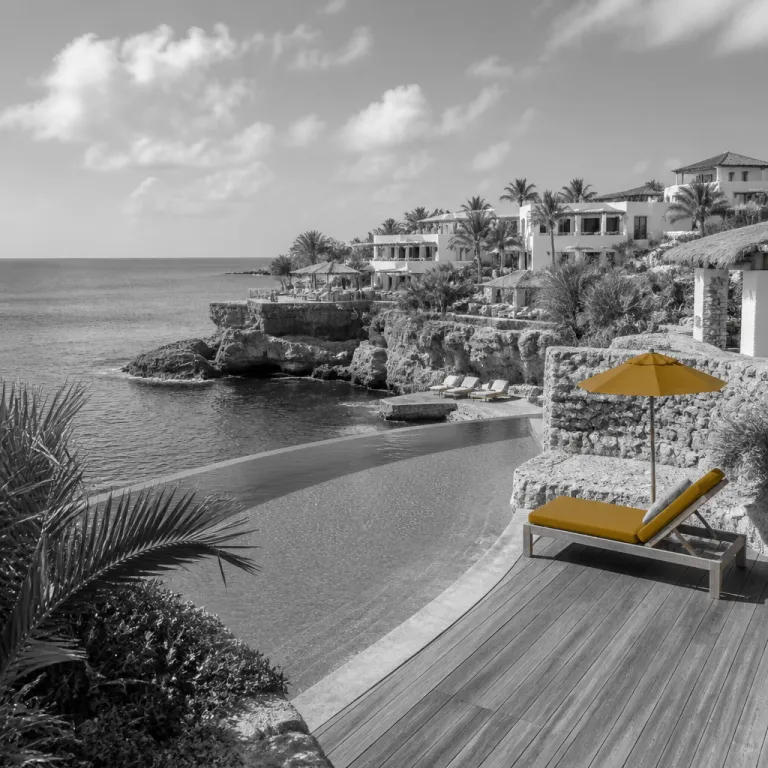
What is Curaçao known for among luxury travelers
Curaçao is known for its rare blend of European elegance and relaxed Caribbean rhythm. On this island you feel Dutch heritage, Afro Caribbean culture, and Latin influences come together in a way that feels both refined and deeply authentic. Many guests arrive asking what is Curaçao known for, and leave speaking about color, flavor, and quiet luxury rather than just beaches.
The capital Willemstad is the clearest answer to what Curaçao is known for, with its UNESCO listed waterfront, pastel façades, and the moving Queen Emma Bridge framing every Curaçao view. When you stay in or near Willemstad Curaçao, you can walk from high end waterfront suites to intimate restaurants, art galleries, and the historic port in minutes, which makes the city ideal for travelers who want culture and comfort in one place. Curaçao is also known for its safety, its stable role within the Kingdom of the Netherlands, and its year round sunshine that keeps luxury resorts operating at a consistently high level.
For many visitors the island becomes a sophisticated alternative to a typical southern Caribbean cruise stop, because nights in Curaçao feel calmer and more curated than in some neighboring islands. Guests who have already stayed in Aruba or the Dominican Republic often say Curaçao feels more personal, with smaller properties and staff who remember your name after the first day. One couple from Miami described their week as “a Caribbean city break with a private island attached,” capturing how this destination rewards longer stays, with enough hidden bays, caves, and cultural sites to fill a full week without repetition.
Hidden bays, calm coves, and Klein Curaçao for refined beach escapes
Ask any frequent guest what Curaçao is known for and they will mention its beaches, but not just one long strip of sand. The island offers a necklace of small coves, each with a different Curaçao view, from rugged cliffs to gentle turquoise shallows perfect for children. Luxury travelers often choose properties that provide private access or curated transfers to these quieter bays, avoiding the crowds that can accompany a southern Caribbean cruise arrival.
Families who value calm water and soft entry points should look at curated guides to snorkelling with children in Curaçao in the calm bays. These sheltered coves show what Curaçao is known for beneath the surface, with turtles, bright reef fish, and clear visibility that rivals the best Caribbean destinations. Choosing a premium hotel that partners with qualified guides ensures your snorkeling level and your children’s comfort are respected, while still giving you access to the island’s most photogenic underwater spots.
For a more exclusive day, many high end guests book a private yacht or small group trip to Klein Curaçao, a tiny uninhabited island southeast of the main coast. Klein Curaçao is known for its powder white sand, shipwrecks, and a raw, open Caribbean view that feels far removed from the bustle of Willemstad Curaçao. When you return to your hotel after a day on Klein Curaçao, sunset drinks often feature the local liqueur blue Curaçao, which connects the island’s flavors to its sea and sky.
What Curaçao is known for inland: national parks, caves, and coastal drama
Beyond the shoreline, Curaçao is known for landscapes that surprise guests who expect only flat beaches. The island’s northwest holds Christoffel national park, where early morning hikes reward you with sweeping Curaçao views over cactus dotted hills and the southern Caribbean horizon. Many luxury hotels now arrange private guided hikes with sunrise transfers, which allows you to enjoy the park in cooler temperatures and return in time for a late breakfast by the pool.
On the same side of the island, Shete Boka and the adjacent Boka National coastal area reveal another answer to what Curaçao is known for. Here the Caribbean Sea crashes into limestone inlets called bokas, sending spray high into the air and carving caves and blowholes along the shore. Travelers who usually book only reef excursions often choose curated overland adventures that combine Christoffel at dawn with Shete Boka by noon, and specialized operators are profiled in resources such as this guide to Curaçao’s overland adventures for reef focused travelers.
Closer to Willemstad, the Hato Caves near the airport offer a different kind of hidden gem, with stalactites, stalagmites, and petroglyphs that speak to the island’s earliest inhabitants. Guided tours through the Hato Caves are short enough to fit between arrival or departure times, which makes them ideal for guests extending their Caribbean cruise with extra nights on the island. When you stand in the cool interior of the Hato Caves and then step back into the bright Curaçao sun, you understand how varied this island is compared with many other southern Caribbean destinations.
Willemstad’s historic quarters, Kura Hulanda, and living heritage
For culturally curious travelers, what Curaçao is known for goes far beyond beaches and blue Curaçao cocktails. Willemstad’s historic quarters of Punda and Otrobanda showcase Dutch colonial architecture painted in sherbet colors, with narrow alleys leading to hidden courtyards and waterfront terraces. Walking these streets from your hotel, you feel why the city is recognized for its cultural and historical significance within the wider Caribbean.
One of the most meaningful places to stay or visit is Kura Hulanda in Otrobanda, a restored village complex that once housed the Kura Hulanda Museum. The Hulanda Museum focused on the transatlantic slave trade and Curaçao’s role as a port, and its legacy still shapes how visitors understand what Curaçao is known for in terms of resilience and cultural diversity. When guests ask local guides what is Curaçao known for historically, they often hear about this layered past, from indigenous communities to Spanish and Dutch colonization and modern day autonomy within the Kingdom of the Netherlands.
Nearby Fort Amsterdam anchors the entrance to St Anna Bay, where cruise ships glide past the pastel skyline of Willemstad Curaçao. Fort Amsterdam is known for its role as a Dutch administrative center and for the small church within its walls, which together symbolize both governance and faith on the island. From the ramparts you gain a Curaçao view that connects the city’s maritime history with its present role as a refined port of call in the southern Caribbean.
How Curaçao compares with Aruba, the Dominican Republic, and Florida gateways
Many luxury guests first hear about Curaçao while planning a Caribbean cruise or a multi stop itinerary that includes Aruba, Puerto Rico, or the Dominican Republic. When they ask what Curaçao is known for compared with these destinations, the answer often centers on culture, calm, and a more intimate scale. Curaçao feels quieter than San Juan in Puerto Rico or the capital of the Dominican Republic, yet more culturally layered than some resort corridors in Aruba.
Travelers flying from Florida often route through Fort Lauderdale or Miami, pairing a city break in Lauderdale Florida with several nights on the island. Fort Lauderdale is known for its boating canals and beach hotels, but many guests say the shift from Lauderdale Florida to Curaçao feels like moving from a polished marina to a living open air museum. While Florida offers convenience and shopping, Curaçao is known for its walkable Willemstad streets, its Curaçao views over historic quays, and its sense of place that remains strong even as new luxury properties open.
Some cruise itineraries link San Juan Puerto Rico, Aruba, and Curaçao on one southern Caribbean loop, which allows travelers to compare islands in a single voyage. Guests who extend their stay in Curaçao after a Caribbean cruise often comment that the island’s best qualities emerge at a slower pace, during unhurried dinners and quiet mornings by the sea. If you are choosing dates and deciding where to add extra nights, Curaçao rewards that choice with a balance of comfort, authenticity, and space that can be harder to find in busier parts of the Caribbean.
Choosing luxury stays and planning dates for an exceptional Curaçao trip
For travelers focused on what Curaçao is known for in the luxury segment, the choice of hotel shapes the entire experience. High end properties on this island increasingly emphasize sense of place, integrating Dutch Caribbean design, local art, and curated excursions into their offerings. When you compare options, look for hotels that provide strong concierge services, private transfers, and partnerships with expert guides for both marine and inland activities.
New openings and renovations continue to raise the level of premium stays, with brands such as TUI Blue confirming upscale options priced from around 413 euros per night, as highlighted in this overview of a TUI Blue Curaçao opening with nightly rates. These developments show how Curaçao is known for moving beyond simple sun and sand toward a more sophisticated hospitality scene that still feels approachable. When selecting dates, consider shoulder seasons when the island is less busy, giving you more space at pools, restaurants, and on excursions to Klein Curaçao or the Hato Caves.
Luxury travelers who value privacy often choose suites with expansive Curaçao views over the sea or the colorful roofs of Willemstad Curaçao. Others prefer restored historic properties near Fort Amsterdam or Kura Hulanda, where evenings can be spent walking to dinner along the waterfront rather than taking a car. Whatever your style, the island is known for staff who are quick to personalize experiences, from arranging private tastings of blue Curaçao to securing last minute tables at the best restaurants in town.
Key figures that show what Curaçao is known for
- Curaçao welcomes around 500 000 tourists per year, according to the Curaçao Tourism Board, which is significant for an island of about 155 000 residents and reflects its growing appeal in the southern Caribbean.
- The island offers roughly 35 named beaches, based on data from the Curaçao Tourism Board, giving luxury travelers an unusually high number of distinct coves and bays to choose from during a single stay.
- Willemstad, the capital of Curaçao, is recognized as a UNESCO World Heritage city, which underlines how strongly the island is known for cultural and architectural heritage as well as coastal scenery.
- Curaçao forms part of the Kingdom of the Netherlands as a constituent country, a political status that supports stable governance and long term investment in premium tourism infrastructure.
FAQ about what Curaçao is known for
What is the capital of Curaçao and why is it famous
The capital of Curaçao is Willemstad, a city known for its colorful Dutch Caribbean architecture, floating Queen Emma Bridge, and historic harbor that together form a UNESCO World Heritage site. Many travelers choose hotels in or near Willemstad to enjoy easy access to restaurants, museums, and waterfront views.
What languages are spoken on the island of Curaçao
Curaçao is known for its linguistic diversity, with Dutch, Papiamentu, and English all widely spoken in daily life. This mix makes it easy for many international visitors to communicate with hotel staff, guides, and drivers during their stay.
Is Curaçao part of the Netherlands
Curaçao is a constituent country within the Kingdom of the Netherlands, which means it has internal autonomy while remaining linked to the Dutch crown. This status supports legal stability and reliable infrastructure, both important factors for luxury and premium tourism.
What is Curaçao mainly known for among tourists
Curaçao is known for its clear Caribbean waters, excellent diving and snorkeling, colorful Willemstad architecture, and a strong blend of cultures that includes Dutch, African, and Latin American influences. Many visitors also highlight the island’s relaxed atmosphere and the quality of its smaller upscale hotels.
Is Curaçao a good alternative to more crowded Caribbean islands
Travelers often see Curaçao as a refined alternative to busier destinations such as parts of the Dominican Republic or some resort areas in Aruba. The island offers a quieter ambiance, strong cultural identity, and a growing range of luxury properties without the same level of crowding found in larger mass market resorts.
Practical travel notes for luxury visitors
Peak season in Curaçao generally runs from December through April, when the island is driest and many northern travelers escape winter. May, June, and November are appealing shoulder months, with slightly fewer visitors and often attractive rates at upscale hotels. Curaçao lies outside the main Atlantic hurricane belt, so the island is less affected by major storms than some Caribbean neighbors, though brief showers can occur year round.
Nonstop and connecting flights typically route through hubs such as Amsterdam, Miami, New York, Toronto, and several Latin American gateways, giving luxury travelers multiple options for premium cabins. Visitors from the European Union, the United States, Canada, and many Latin American countries usually do not need a visa for short leisure stays, but passports must be valid for the duration of the trip and onward or return tickets are required. Checking current entry rules with official government or airline sources before departure ensures a smooth arrival and lets you focus on the island’s quieter, more cultivated side.