From VOC routes to the Indonesian table in Curaçao
The story of Indonesian-influenced cuisine in Curaçao begins with Dutch East India Company (VOC) ships sailing between Southeast Asia and the Caribbean from the 17th century onward. As the Netherlands administered both the Dutch East Indies and this island, they moved soldiers, administrators and a smaller number of Indonesian migrants whose culinary traditions quietly reshaped daily meals in Curaçao. That movement of people and recipes created a rare type of cross-ocean food bridge, where a Caribbean island absorbed Javanese flavors without losing its own color and character.
Historical work on Dutch Caribbean labor and migration, including studies held at the National Archives of Curaçao and the Nationaal Archief in The Hague, notes that people from Java and other parts of the former Dutch East Indies passed through or settled in Curaçao during the late 19th and early 20th centuries, often working as cooks in Dutch households or for the colonial administration. Using traditional cooking techniques but substituting raw local ingredients, they simmered stew-style dishes that blended Caribbean onions and sweet peppers with Indonesian spice pastes. Over time, this Javanese–Curaçao food heritage filtered from private homes into small eateries in Willemstad and the surrounding districts, then into the wider island food culture that travelers taste today. Willemstad, split between Punda and Otrobanda, is where most visitors base themselves. For background, the Wikipedia entry on Curaçao fills in the historical detail.
Historians describe this as a cultural fusion rather than a one-way imposition, because local communities quickly adapted imported recipes to island realities. One concise summary from a Dutch Caribbean food study held in the University of Curaçao library puts it simply and powerfully: “Indonesian cuisine integrated into Curaçao's food culture.” That single sentence captures how nasi goreng, bami goreng and satay became as familiar in Willemstad as keshi yena or cactus soup from the Curaçao countryside.
Dishes that crossed oceans: satay, rijsttafel and island comfort
Walk through Willemstad, the UNESCO World Heritage capital of Curaçao, and you will see this Indonesian-Curaçao culinary story written straight onto menus. Chicken satay with peanut sauce appears beside red snapper and mahi dishes, while rijsttafel is offered as a Dutch–Indonesian feast of many small plates. At waterfront restaurants around Handelskade or in Pietermaai District, servers casually describe these combinations as “our island take on Indonesian food,” turning every shared dish into a story rather than just another delicious meal.
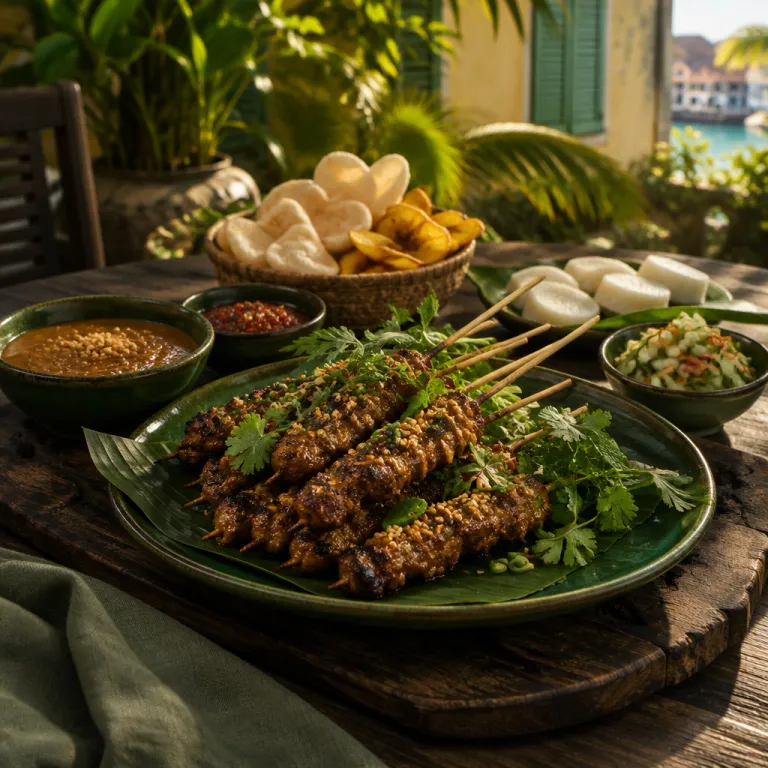
Classic satay skewers here often use local chicken or mahi-mahi, marinated in spice pastes that echo Indonesian recipes but grilled over Caribbean charcoal. The plate might arrive with a bright salad of onions and bell peppers, a spoon of peanut sauce and sometimes a side of pumpkin pancakes or fried plantain, showing how culinary traditions bend to island produce. When you taste this Curaçao take on Indonesian street food, you taste a careful balance between Dutch colonial influence, Indonesian technique and Caribbean terroir. Up-to-date practical information is published by the Curacao Tourist Board.
Rijsttafel, literally meaning rice table, remains the most theatrical expression of this shared history in Curaçao. As one dataset explains without embellishment: “A Dutch-Indonesian meal with multiple small dishes.” In upscale hotel dining rooms in areas such as Piscadera Bay and Jan Thiel, chefs may reinterpret rijsttafel with local cactus soup, keshi yena–inspired stuffed cheese bites and even a Curaçao liqueur–infused dessert, turning a colonial-era format into a modern island tasting menu.
Where Indonesian heritage lives: markets, food trucks and hotel kitchens
To feel this Indonesian–Caribbean food heritage at street level, start at Plasa Bieu, the old market hall in central Willemstad. Here, local cooks at stalls such as Yvonne di Plaza and Zus di Plaza serve hearty plates that mix Caribbean stews with occasional Indonesian touches, from satay skewers to bami-style noodles beside fried red snapper. The atmosphere is informal and vivid, with every stall offering its own type of comfort food and every plate arriving in a different color and size. Punda stays walkable from most of the hotels around the Sint Annabaai.
After dark, the Truk’i Pan food trucks take over busy corners and parking lots, extending this Southeast Asian thread into the night. You might order a satay sandwich layered with onions and peppers, or a box of noodles tossed with bell peppers and grilled mahi, then eat it leaning against a car while music spills from nearby bars. These food trucks, documented in local tourism brochures and Curaçao culinary guides, are where the island’s satay tradition feels most alive, because feedback from regulars shapes each dish, and any error in seasoning is corrected the next evening.
Luxury and premium hotels on the island now treat this culinary legacy as part of their main narrative rather than a passing trend. Their chefs study recipes brought by Indonesian migrants, consult Dutch-Indonesian cookbooks preserved in family collections and local archives, then weave them into menus that also highlight kadushi cactus, cactus soup, stuffed cheese and local cheeses used in keshi yena. When you book a refined stay, you can often filter for properties where Indonesian-inspired menus are taken as seriously as spa design or room type.
How luxury hotels translate Indonesian flavors for discerning travelers
High-end properties in Curaçao understand that this strand of Indonesian-influenced cuisine is a differentiator in the wider Caribbean. Rather than offering generic Asian dishes, they collaborate with Indonesian-trained cooks or local chefs who grew up eating satay at home, then refine those recipes for elegant dining rooms. The result is a style of food that feels both rooted and polished, perfectly aligned with guests who expect narrative and nuance on every plate.
At dinner, you might start with a small bowl of cactus soup scented with lemongrass, followed by chicken satay glazed with a reduction of blue Curaçao and Curaçao liqueur. Another night, a tasting menu could pair red snapper in a light coconut stew with pumpkin pancakes, then finish with a dessert of stuffed cheese fritters drizzled in a sauce the exact blue color of the island’s famous liqueur. These menus show how chefs treat this Javanese–Curaçao fusion not as a museum piece but as a living language that speaks fluently with Caribbean ingredients.
For solo travelers who value privacy and control, the best luxury hotels balance culinary ambition with clear communication. Detailed menu content, transparent allergy notes and a visible privacy policy on booking pages all build trust before you even sit down to eat. When a property explains how it sources raw produce from growing Curaçao farms and how it supports cactus-growing projects in the Curaçao countryside, you understand that the story behind your meal is being handled as carefully as the flavors on the plate.
Planning your stay: reading menus, choosing hotels and tasting with context
When you plan a premium stay on this island, the Indonesian thread in Curaçao’s cuisine should sit alongside reef access and room size in your decision making. Start by reading hotel restaurant menus as closely as you read room descriptions, noting where satay, bami goreng or rijsttafel appear beside Caribbean classics like keshi yena or mahi fillets. If a property treats this fusion as central to its culinary identity rather than a token dish, that is usually a sign that the kitchen is thinking deeply about place. Pietermaai, Jan Thiel and Westpunt each suit a very different kind of stay.
Independent travelers often prefer smaller luxury properties, and a curated list of small hotels in Curaçao for refined island stays can help narrow the field. Once you have a shortlist, look for guest feedback that mentions breakfast pumpkin pancakes, late-night Truk’i Pan food trucks parked nearby or thoughtful use of onions and bell peppers in Indonesian-inspired dishes. These details show how this layered food heritage filters through the entire guest experience, from morning cactus soup shots to blue Curaçao cocktails at sunset.
On arrival, give yourself permission to skip main sightseeing for one meal and focus only on the table. Visit Plasa Bieu at lunch, then follow the Truk’i Pan circuit after dark, comparing how each stall or truck interprets the same type of satay or noodle dish. That quiet act of tasting across venues will teach you more about the island’s layered history than any brochure, and it will anchor your luxury stay in flavors that feel both Dutch and deeply Caribbean. Staying in Pietermaai puts Plasa Bieu and the food trucks within walking distance.
FAQ
How did Indonesian cuisine reach Curaçao in the first place ?
Indonesian cuisine arrived in Curaçao through Dutch colonial rule, when the Netherlands controlled both the Dutch East Indies and this Caribbean island. Indonesian migrants came as laborers and domestic workers, bringing recipes, spice blends and cooking techniques into Dutch and local households. Over time, those culinary traditions blended with Caribbean ingredients and tastes, creating what many now describe as a distinctive Indonesian–Curaçao food tradition.
What is rijsttafel and where can I try it in Curaçao ?
Rijsttafel is defined in historical records as “A Dutch-Indonesian meal with multiple small dishes.” In Curaçao, some upscale restaurants and hotel dining rooms in Willemstad, Jan Thiel and Piscadera Bay offer modern rijsttafel experiences that combine Indonesian classics with local elements such as keshi yena bites, cactus soup or red snapper. When booking a luxury stay, check restaurant menus in advance or email the concierge to ask whether rijsttafel or Indonesian tasting menus are available during your visit.
Which Indonesian inspired dishes should I look for on hotel menus ?
On Curaçao hotel menus, look for chicken satay with peanut sauce, bami goreng, nasi goreng and slow-cooked beef rendang. Many chefs pair these with Caribbean sides like fried plantain, pumpkin pancakes or salads of onions and bell peppers, reflecting the island’s mixed culinary traditions. In higher-end properties, you may also see rijsttafel-style tasting menus that integrate local seafood such as mahi and red snapper.
Are there places outside hotels to experience this food heritage ?
Yes, this Indonesian–Curaçao culinary heritage is very visible beyond hotel restaurants. Plasa Bieu in Willemstad offers market-style lunches where Indonesian touches appear beside traditional Caribbean dishes, while Truk’i Pan food trucks serve satay sandwiches and noodle boxes late into the night. Exploring these local venues gives you a more informal, everyday view of how Indonesian and Caribbean flavors coexist on the island.
Why does understanding this food history matter for luxury travelers ?
Understanding the Indonesian thread in Curaçao’s cuisine adds depth to every meal you eat on the island. It reveals how Dutch colonial routes, Indonesian migrants and local communities shaped what appears on your plate, from satay skewers to stuffed cheese and cactus soup. For luxury travelers who value context, that knowledge turns dinner from a simple service into a meaningful part of the journey.