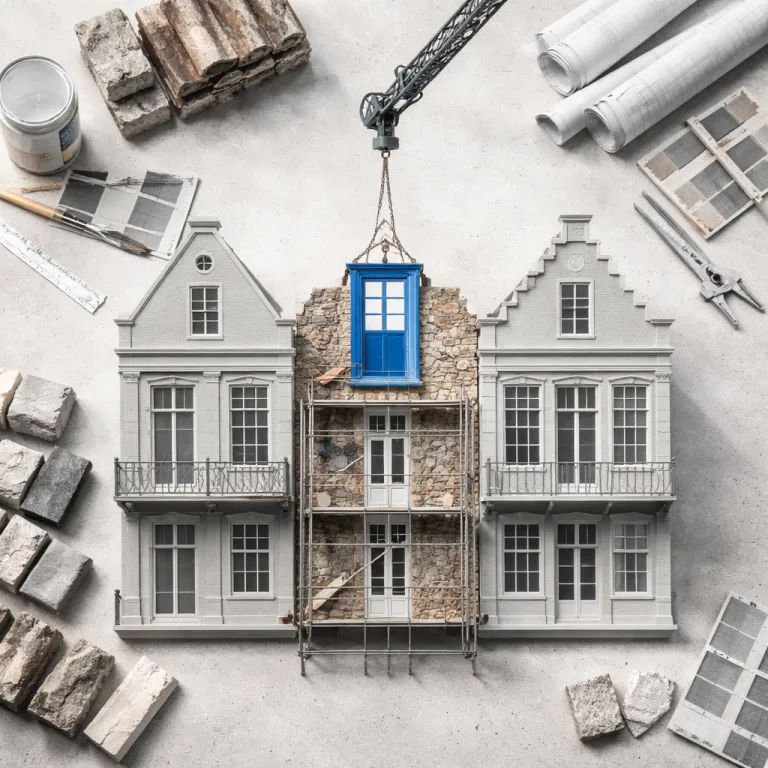
Heritage hotel Curaçao as a competitive moat in the Caribbean
On Curaçao, the most interesting new luxury hotel is often an old building. While neighbouring islands chase the next glass fronted resort on a generic beach, Willemstad quietly leans on its UNESCO protected streets to shape a different kind of hospitality experience. For the traveler choosing a heritage style stay in Curaçao, that difference is not theoretical; it is what you feel the moment you step from the Caribbean heat into a cool coral stone hallway.
The island’s capital, Willemstad, includes hundreds of protected façades within its historic area, and adaptive reuse is now the only realistic way to open a high end hotel inside this core. That constraint has become Curaçao’s advantage, because every restored inn or resort carved from a merchant house or waterfront warehouse carries story density that a new build beach resort simply cannot buy. Local planners and investors note that a heritage focused Curaçao project can command higher rates, longer stays and more repeat visits, precisely because the rooms, the balconies and even the staircases are inseparable from the island’s layered history.
Spend a night in a restored mansion in the Pietermaai district and you immediately see why this strategy matters for business leisure travelers. You might arrive for meetings at a modern Curaçao resort near a conference venue, then shift to a smaller historic property in Pietermaai for two nights of slower living, with a balcony over the sea and a short walk to local restaurants. The same guest who books efficient rooms with strong air conditioning and a reliable coffee maker for workdays will happily pay a premium for a duplex suite in a former townhouse where the room includes king size comfort and original hardwood floors.
From an investor’s perspective, Curaçao’s heritage stock is a moat that Aruba and other purpose built resort islands simply cannot replicate. A beach hotel on a blank stretch of sand can be copied almost anywhere, but a hotel in Willemstad Curaçao that occupies a centuries old waterfront block is anchored to that exact piece of the island. That is why actors such as the Curaçao Heritage Fund and developers like Pietermaai Oasis are directing capital into old buildings rather than chasing the next anonymous resort spa on the outskirts. In a 2023 presentation, for example, the Heritage Fund highlighted that renovated historic hotels in its portfolio were achieving average daily rates roughly 15–20% above comparable non heritage properties in the same star category (Curaçao Heritage Fund, 2023 investor briefing).
The pattern is visible across the portfolio of hotels Curaçao now promotes to high end travelers. Properties such as Avila Beach Hotel, which has grown from a historic mansion into a full service beach resort with roughly one hundred fifty rooms according to recent operator statements and local tourism board data (Curaçao Tourist Board accommodation overview, 2022), show how careful renovation can scale without erasing character. At the same time, larger players such as the Curaçao Marriott on Marriott Beach are learning to frame their new inventory with heritage anchored amenities, positioning their resort as a base while encouraging guests to spend at least part of their stay in smaller historic hotels within Willemstad.
For guests comparing hotels Curaçao wide, this creates a two speed market that actually works in their favour. You can book a Curaçao resort with a spa casino, extensive amenities and a predictable king bed layout for the business segment of your trip, then pivot to a heritage rich address in Pietermaai for the leisure extension. The island’s investors are betting that this mix of efficient resorts and character filled historic hotels will keep Curaçao ahead of islands where every new hotel looks and feels the same.
Adaptive reuse in Willemstad and Pietermaai: how old walls create new value
Walk through the Pietermaai district at dusk and you can read Curaçao’s investment thesis in pastel plaster and wrought iron balconies. Once crumbling townhouses now host intimate hotels, with rooms that open directly onto courtyards scented by the sea instead of anonymous internal corridors. This is adaptive reuse in action, and it is reshaping how travelers think about a heritage hotel Curaçao stay.
The Curaçao Heritage Fund has publicly reported capital deployment into several thousand square metres of renovated properties, much of it within walking distance of central Willemstad. Their model is simple but powerful: investors purchase and renovate old buildings into hotels, with clear objectives to preserve cultural heritage, attract tourists and generate stable returns. In its 2022 annual report, the fund cited an average occupancy rate in the mid 70% range for renovated assets, compared with island wide averages closer to the mid 60% range for similar scale hotels (Curaçao Heritage Fund, 2022 annual report). In parallel, developers such as Pietermaai Oasis specialise in turning historic buildings into high end hotels, proving that heritage and profitability can share the same room without compromise.
Inside these properties, the amenities quietly match or exceed those of a conventional Curaçao resort. You still find strong air conditioning, a quality coffee maker in the room, and a king bed dressed in crisp linen, but you also get original beams overhead and a balcony that frames the sea and the Willemstad skyline. For many guests, that layered experience is the best of both worlds, because the hotel delivers modern comfort while the building itself tells the story of the island.
Consider how this plays out in Pietermaai boutique style properties, where a cluster of adjacent houses has been stitched into a single hotel with perhaps thirty or forty rooms. A duplex suite might span two original floors, connected by a restored staircase, and the suite often includes king size bedding, a generous sitting area and sometimes even a small spa style bathroom carved from what was once a storage room. These rooms are not interchangeable boxes; they are individual spaces that reward repeat stays, because no two visits feel exactly the same.
That individuality translates directly into higher average daily rates and stronger guest narratives. A guest who spends three nights in a heritage hotel Curaçao property in Pietermaai is far more likely to share detailed stories and photography than someone who stayed in a standard beach resort with identical rooms. For hotels Curaçao wide, those organic narratives are worth more than any marketing campaign, because they position the island as a place where each hotel stay is an experience rather than a commodity.
Even large brands are learning from this adaptive reuse logic. While the Curaçao Marriott and Dreams Curaçao operate as substantial resorts with extensive amenities, they increasingly promote curated experiences in Willemstad and Pietermaai, encouraging guests to split their stay between a full service resort spa and a smaller heritage hotel in town. This hybrid pattern lets travelers enjoy the casino, spa and broad beach at a Curaçao resort, then shift to a more intimate hotel where the balcony rail still bears the marks of centuries of trade winds.
Local government and UNESCO partnerships reinforce this direction by making new large scale construction inside the historic core difficult, which in turn protects the value of existing heritage hotels. As one planning document summarises it, the goals are “to preserve heritage and attract tourists” and to clarify “what benefits renovated historic hotels offer” and “how investing in old buildings impacts the local economy” (Government of Curaçao, Willemstad Urban Heritage Management Plan, 2021). Those three linked ideas now underpin almost every serious hotel investment conversation on the island.
The scale dilemma: when heritage hotels meet resort economics
For all their charm, Curaçao’s heritage hotels face a hard constraint that every investor understands. Historic buildings in Willemstad and the Pietermaai district rarely allow more than a few dozen rooms without compromising structure or character, which clashes with the economics of brands that prefer resorts with two hundred keys or more. This is where the tension between heritage hotel Curaçao projects and conventional resort development becomes most visible.
Large operators such as Curaçao Marriott, Dreams Curaçao and Sunscape Curaçao need scale to support multiple restaurants, a full spa casino, extensive meeting space and a broad beach footprint. Their Curaçao resort models rely on predictable room counts, standardised amenities and efficient back of house layouts that are almost impossible to retrofit into a narrow waterfront townhouse. That is why you see these brands anchoring themselves on the island’s wider beaches, while leaving the tight urban fabric of Willemstad to smaller hotels and independent investors.
Yet the smartest capital on the island is no longer treating these as competing products. Instead, investors are building portfolios where a large beach hotel or beach resort handles volume, while a cluster of heritage hotels in Willemstad Curaçao and Pietermaai captures the high yield, story seeking traveler. For the guest, this means you might spend two nights at a resort spa with a generous pool deck and then move into a duplex suite in town where the room includes king size bedding, original tile floors and a balcony over the harbour.
This split stay pattern is particularly attractive for business leisure travelers extending work trips. You can base yourself at a Curaçao resort near key offices or conference venues, enjoying reliable air conditioning, a strong desk setup and quick access to meeting rooms. Once the formal agenda ends, you shift to a heritage hotel Curaçao property in Pietermaai, where the same king bed and coffee maker are present, but the overall experience is more local, with independent restaurants, live music and the sea just a short walk away.
From a revenue perspective, this approach allows owners to capture different segments without diluting brand positioning. The resort can market itself as the best option for families and groups who prioritise beach access, pools and a casino, while the heritage hotels focus on couples, solo travelers and executives who value architecture, intimacy and proximity to Willemstad’s cultural life. Over time, local operators report that guests who sample both sides of this equation are more likely to return to the island, because they feel they have only scratched the surface of what Curaçao’s hotels can offer.
There is also a defensive logic at work. UNESCO protections and local planning rules make it difficult to add new large scale hotels Curaçao side within the historic core, which effectively caps supply and supports rate growth for existing heritage properties. Investors know that while another generic beach hotel can always be built further along the coast, there will never be a second chance to buy a row of eighteenth century warehouses on the Willemstad waterfront and turn them into a hotel with rooms that open directly onto the quay.
For travelers trying to navigate these choices, a practical strategy is to treat heritage hotels and resorts as complementary rather than interchangeable. Use a resource like the in depth family and property guide on MyCuraçaoStay, particularly the section on where to stay in Curaçao with kids, as a reality check on which Curaçao resort or beach resort best fits your needs, then layer in a smaller heritage stay for texture. The result is a trip that feels both efficient and richly textured, with the island’s history and its beaches sharing equal billing.
The next cycle: hybrid models and the widening heritage premium
Curaçao’s most interesting hospitality projects now sit at the intersection of heritage and new build ambition. Properties like Pyrmont Curaçao, with its Kas di Pueblo spa in a restored nineteenth century landmark under the Marriott Autograph Collection flag, signal where the island is heading. The main inventory may be fresh construction, but the emotional centre of the hotel is a heritage building that anchors the entire resort experience.
This hybrid model solves the scale dilemma without sacrificing character. A developer can deliver the room count and amenities that brands such as Curaçao Marriott or Dreams Curaçao require, including multiple pools, a full resort spa and perhaps even a casino, while using a restored mansion or warehouse as the signature arrival, spa or dining space. Guests still enjoy modern rooms with efficient air conditioning, a reliable coffee maker and a king bed, yet their most vivid memories come from the heritage wing, where a balcony overlooks original courtyards and the walls carry the patina of time.
For the island, this approach deepens the heritage hotel Curaçao narrative rather than diluting it. Even travelers who choose a large Curaçao resort on Marriott Beach or near Avila Beach now encounter heritage as part of their stay, whether through a spa treatment in a restored building or a dinner in a former merchant house. Over time, this normalises the expectation that a hotel on Curaçao, whether a beach hotel or an urban property, should connect guests to the island’s history as well as its sea.
Economically, the heritage premium is likely to widen over the next cycle. As more investors compete for the finite stock of historic buildings in Willemstad and the Pietermaai district, values for well located properties will rise, reinforcing the logic of careful renovation and high touch hospitality. At the same time, new resort sites along the coast face more direct competition from other islands, where a beach resort with similar rooms and amenities can be built at comparable cost but without Curaçao’s architectural depth.
For business leisure travelers, the implication is clear. If you want your Curaçao stay to feel different from a trip to any other Caribbean island, prioritise at least two nights in a heritage hotel Curaçao property, ideally in Willemstad or Pietermaai, and then use a larger Curaçao resort for the portion of your trip that demands extensive amenities. Treat these as distinct products rather than variants of the same hotel, and you will extract more value from both.
Investors are already structuring portfolios around this behaviour, pairing heritage hotels with resorts under shared management to encourage split stays and cross selling. A guest might book a duplex suite in a restored townhouse where the room includes king size bedding and a small spa bathroom, then receive a preferred rate for a follow on stay at a partner beach resort with a spa casino and family friendly pools. This kind of ecosystem thinking is precisely why Curaçao, with its deep heritage stock, is better positioned than islands that rely solely on new build resorts.
In the long run, the islands that win the high end traveler will be those that offer both polished service and a strong sense of place. Curaçao’s decision to keep buying old buildings, renovating them into hotels and integrating them with modern resorts is not nostalgia; it is strategy. On this island, heritage is not just a backdrop for your stay, it is the asset that keeps guests — and capital — coming back.
Key figures behind Curaçao’s heritage hotel strategy
- The Curaçao Heritage Fund reports a total area of renovated properties of approximately 5 862 m² in recent disclosures, a scale that signals serious commitment to turning historic buildings into viable hotels rather than isolated passion projects (Curaçao Heritage Fund, 2022 annual report).
- Avila Beach Hotel operates around 150 rooms within a complex that grew from a historic mansion, illustrating how a single heritage property can evolve into a full service beach resort without losing its architectural soul (Curaçao Tourist Board accommodation overview, 2022; Avila Beach Hotel operator statements, 2021–2023).
- UNESCO recognition for the historic area of Willemstad effectively caps the supply of potential heritage hotels, which supports higher average daily rates and long term asset values for investors who secure these rare properties (UNESCO World Heritage Centre, Historic Area of Willemstad listing, updated 2020).
- The timeline from the Plaza Hotel bankruptcy through its sale to a pension fund and the launch of the Pietermaai Oasis project shows how distressed historic assets can be recycled into new hotels, preserving heritage while generating fresh tourism revenue (local court filings on Plaza Hotel Curaçao, 2017; transaction announcements by the acquiring pension fund, 2019; Pietermaai Oasis project notes, 2021).
- Local government and UNESCO partnerships mean that most new hospitality capacity inside the historic core must come from renovation rather than new construction, reinforcing adaptive reuse as the primary growth path for heritage hotel Curaçao projects (Government of Curaçao, Willemstad Urban Heritage Management Plan, 2021).